
I came across this post on Instagram and decided to unpack it.
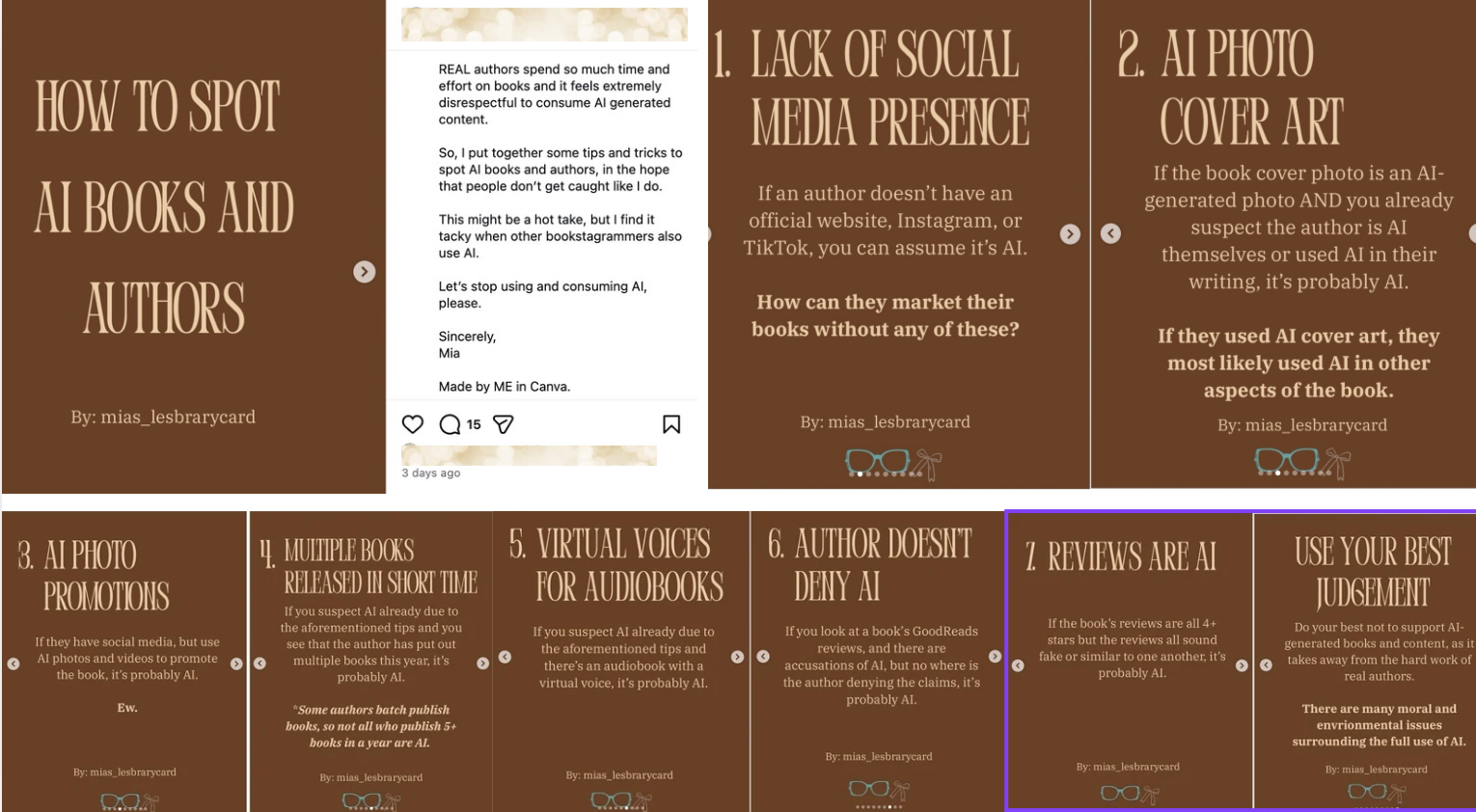
1. “If an author doesn’t have an official website, Instagram or TikTok, you can assume it’s AI.”
This one genuinely made me laugh.
Now before anyone says I’m being defensive… I’m clearly not talking about myself. I'm obviously quite healthy in that department.
I’m speaking on behalf of the thousands of legitimate authors who don’t.
And as someone with an MBA in Digital Marketing who has worked with businesses and clients that have little to no social media presence, this argument is weak.
Yes, AI farms don’t bother building long-term social media communities, but that’s a completely different statement from saying no social media equals AI.
There are plenty of legitimate authors who choose not to be on social media for various reasons.
So what do they do instead?
They market where readers already are. BookBub, Fussy Librarian, Bargain Booksy, Amazon Author Central, Kobo promotions, newsletters, paid book promotions, retailer advertising… you name it.
In fact, many of these marketing channels convert better than social media.
Social media gives you engagement, and a lot of them will probably never buy your books, unless you run paid ads that target your readers. Whereas book promotion services give you readers.
And I’m saying that because I use both.
I’d choose a 100 Amazon followers over a 1000 random social media followers every single time. Those people are already browsing books and buying books.
So can a lack of social media be one small observation?
Sure.
Is it evidence that an author used AI?
Absolutely not.
2. “AI cover art means the book is AI-generated.”
😂 Okay… this one I’m actually going to plead guilty to.
Well… sort of.
When I published my first books, there was no way I was spending R10,000 on a custom illustrated cover.
So I did what a lot of new indie authors do. I went to Fiverr and found a designer I could actually afford. I think I paid around R500 for one of my first covers.
The screenshots I’m sharing are from those Fiverr orders.
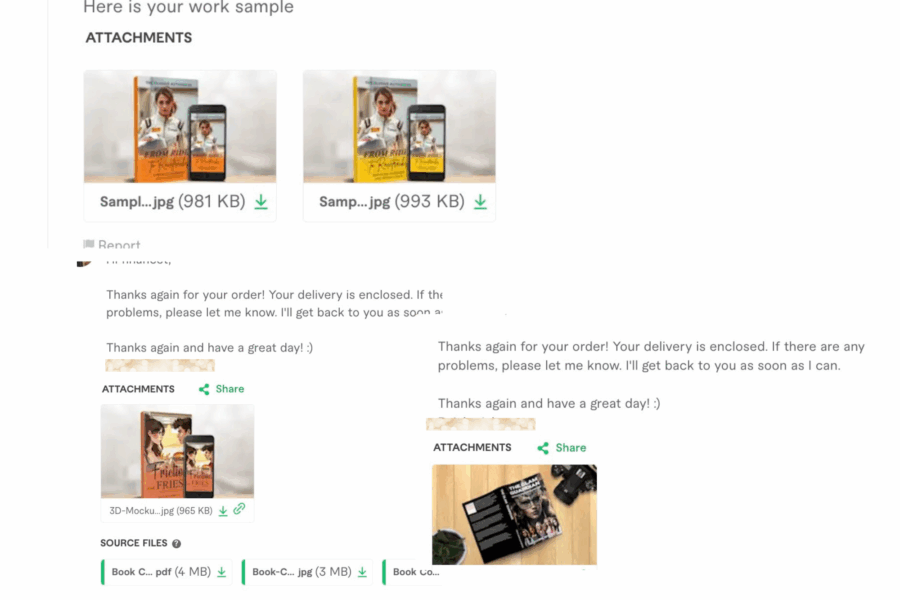 Now here’s the thing… Most authors don’t hire AI artists. They hire designers. And they trust those designers to do their job.
It’s no different to hiring someone to build your website or edit your manuscript. Most clients don’t sit there asking,
“Did you use Photoshop?”
“Did you use an AI masking tool?”
“How exactly did you create this?”
You hired a professional because… well… they’re the professional. Then readers started saying,
“I’m not buying books with AI-generated covers.”
Fair enough. So I listened. I changed my covers. Spent more money. Hired illustrators instead.
Problem solved, right?
😂 Not quite.
Because then you realise something else. Not every illustrator works the same way either. You might happily pay R3,000 for what you believe is a fully illustrated cover…
…only to find out later that AI-assisted tools were used somewhere in the workflow.
Now you’re right back where you started.
Eventually you realise that if you want artwork created entirely from scratch, without any AI assistance whatsoever, you’re often looking at R5,000 to R10,000… sometimes even more.
Fortunately, I was in a position where I could keep changing my covers.
Will I ever make that money back from book sales?
Probably not.
But my publishing journey has also been part of my research, so I looked at it as an investment.
But what about the indie author who can’t?
Should they be excluded from publishing simply because they can’t afford a R10,000 cover?
That’s where I think this conversation needs a bit more nuance.
If we’re talking about deceptive marketing… Let’s have that conversation.
If we’re talking about transparency… I’m all for it.
But saying,
“AI cover = AI-written book.”
…is a leap that just doesn’t make sense.
A book cover is marketing. A manuscript is writing. They’re two completely different creative processes.
One tells you how the book is presented. The other tells you how the story was created.
Confusing the two doesn’t protect readers.
It just increases the chances of accusing genuine human authors based on the size of their publishing budget.
And here’s something most people don’t know about me…
I’m actually an artist at heart.
I grew up sketching fashion designs and even designed my matric classmates’ ball dresses.
I used to make my own wrapping paper using nothing more than highlighters and kokis.
I also ran my own wedding stationery business for over a decade, where I designed and produced handmade stationery, both with and without specialised equipment.
I even designed and built my own website, and that’s how my IT company got started.
So yes…
I could absolutely sit down and design my own book covers or character art if I wanted to.
But I don’t.
I outsource them.
Partly because I simply don’t have the time, but also because neuropathy has affected the stability in my hands.
It’s easier for me to hire someone who does it every day.
So thank you for standing up for artists.
I’m one of them, so I genuinely appreciate it.
But at the same time, you are tearing people like me down by assuming that every affordable cover, or every outsourced design, somehow says something about who wrote the book.
Those are two completely different things.
3. “If an author uses AI images or videos to promote their books on social media, it’s probably AI.”
Okay… now you’re losing me. At this point I want to throw my laptop out of the window.
The irony here is actually quite funny.
The very post making this argument said "made by me in Canva"
Does she know Canva is powered by Ai?
Instagram, Facebook, TikTok, Google, Adobe, Amazon all use AI.
Honestly, you’d struggle to find a platform these days that doesn’t have AI somewhere in its workflow.
So where exactly are we drawing the line?
This goes back to exactly what I said about book covers.
Using AI to market a book and using AI to write a book are two completely different things.
If an author use Canva to make a promo image, or remove the background from a photo, or generate subtitles, or let Instagram suggest a caption…
Has that suddenly rewritten their 90,000-word novel?
No.
Not even close.
The tools they used to market their books tell you absolutely nothing about how it was written.
And here’s something a lot of readers probably don’t realise…
Indie authors do everything. They’re the author, the publisher the marketer the accountant customer support, social media manager, sometimes we’re even packing books ourselves.
So yes… sometimes they use tools that save them time.
Just like any other small business does.
That doesn’t suddenly mean the novel was written by AI.
Marketing is marketing. Writing is writing.
They’re two completely different things.
So saying,
“Their promo video used AI… therefore the book must have been written by AI.”
…is another assumption that really doesn’t tell you anything about how the story was actually written.
4. “Multiple books released in a short period of time? It’s probably AI.”
This is probably one of the most common assumptions I see online, and honestly… it’s one of the weakest.
Let’s put this into perspective.
Imagine Author A publishes 10 books in one year. Sounds suspicious, right?
Now imagine every one of those books is around 20,000 words. That’s a total of 200,000 words for the entire year.
Now let’s look at Author B. They only publish two books per year. Each book is around 150,000 words. That’s 300,000 words in the same year.
Who's more suspicious. 🤔 Yep, thought so.
Some authors write novellas. Some write epic fantasy. Some have books sitting in their drawer for years before publishing them. Others release books they wrote two or three years ago.
Publishing dates are not the same as writing dates.
I could comfortably publish three books in a year.
But I could also show you exactly where many of those manuscripts existed one or even two years before publication.
Some have been on other writing platforms.
I could literally show you timestamps from my first draft, revisions, beta reader feedback, editor comments and final publication.
Does that suddenly make me more human or less human than someone who can’t?
No. It simply shows that publishing is a process. And every author’s process looks different.
This is another example of people confusing publishing speed with writing speed. They’re not the same thing.
And here’s another thing…
Some people naturally write fast. Stephen King can confirm this.
5. “If you already suspect AI, and the audiobook uses a virtual voice, it’s probably AI.”
😂 Okay… Let’s use Amazon itself as an example. Amazon offers a Virtual Voice feature for audiobooks.
That’s right.
The same platform that sells millions of books is actively rolling out AI-generated narration as an audiobook option.
It’s still being rolled out to selected authors, and from what I’ve experienced, it’s often by invitation.
And here’s my question…
Why would an author not test a feature that Amazon itself is offering them for free? Especially as an indie author.
Professional audiobook narration can cost tens of thousands of rand, depending on the length of the book and the narrator. For many indie authors, that’s simply out of reach.
So when Amazon says, “Here’s a beta feature. Give it a try.” …what exactly are authors supposed to do?
Ignore it? Refuse it? Delete the email? Again, we’re confusing two completely different things. An audiobook narrator… …is not the author.
Using a virtual voice to narrate a book tells you absolutely nothing about how the manuscript itself was written.
And Thanks to all these AI witch hunts, I ended up doing the exact same thing to a voice artist what people are doing to authors.
I asked if her voice was AI to the point she actually had to send me the original, unedited recording just to prove it was her real voice.
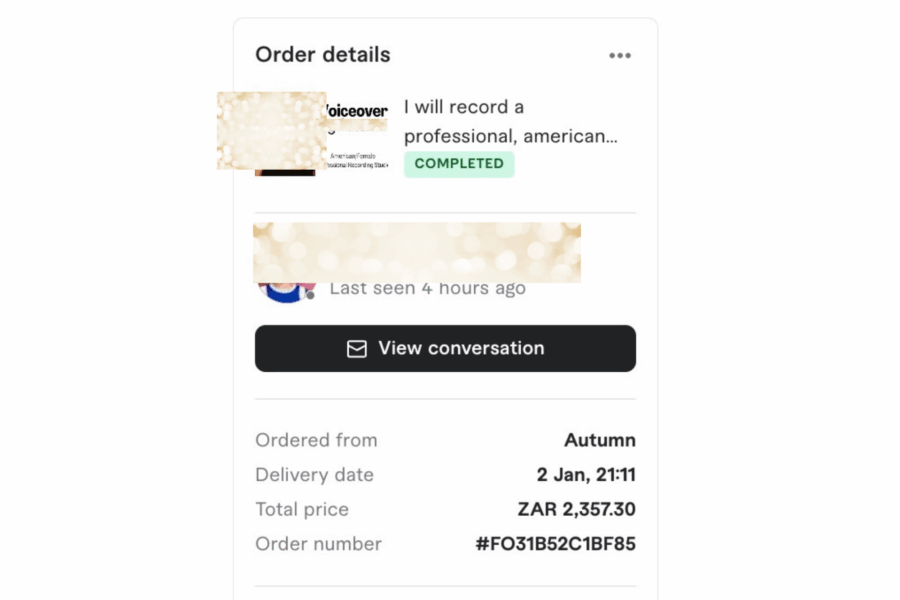
Looking back, I actually feel bad about it.
Just look at the price.
That was for a one-minute advert.
Now imagine what it costs to hire a professional voice actor to narrate an entire audiobook.
This culture of suspicion doesn’t just affect writers anymore.
It’s making us question artists, narrators, designers… pretty much anyone working in the creative industry.
And honestly…
I’m starting to hate what it’s doing to all of us.
6. “If there are AI accusations on Goodreads and the author isn’t denying them… it’s probably AI.”
Ok. I'm actually rolling my eyes for this one.
Here’s a screenshot of an email Goodreads sent me after I tried to respond to an AI accusation on one of my own books.
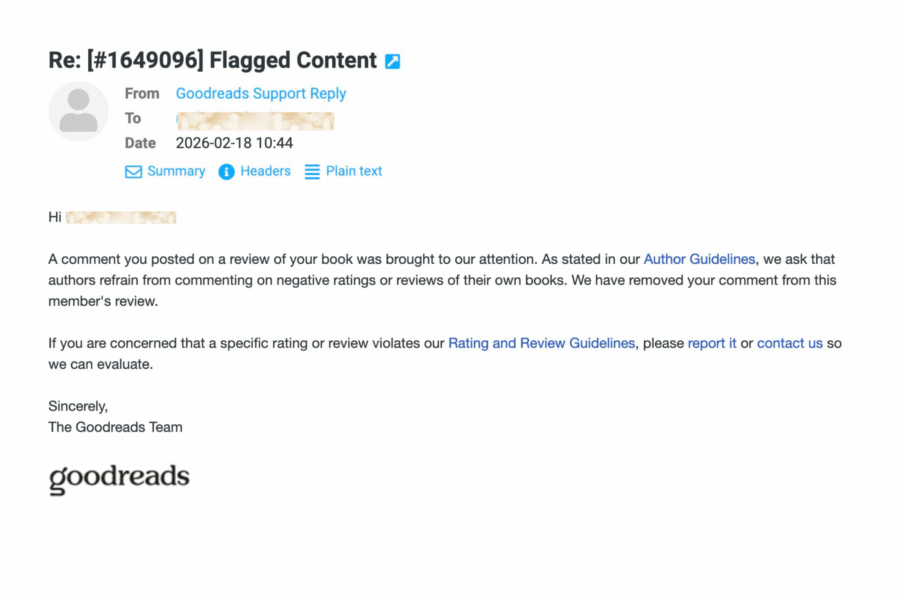 I’m even leaving the ticket number visible. just in case you have any doubts, so that you can confirm with Goodreads.
According to this post… If an author stays silent, they’re probably guilty. But if the author responds… Goodreads removes the response because reviews are considered the reader’s space.
Do you see the problem?
It’s a catch-22.
Respond? Wrong.
Stay silent? Also wrong.
So what exactly is an author supposed to do? This point assumes silence equals guilt. It doesn’t.
Silence can mean many things.
It could also mean the author respects Goodreads’ guidelines.
7. “If all the reviews are 4 or 5 stars and they sound similar or fake… it’s probably AI.”
😂 Well… thank goodness I have 1-star, 2-star, 3-star, 4-star and 5-star reviews.
I guess I’m safe. Or am I? 😂
Seriously though. This one has exactly the same problem as all the others. It’s built on assumptions. Think about it.
If loads of people read the same book, they’re probably going to say similar things.
“I couldn’t put it down.” “The plot twist got me.” “I loved the chemistry.” Thousands of readers have used those exact phrases over the years. Not because they’re fake… Because they’re talking about the same story.
And let’s be honest…
Readers influence each other too. If twenty people loved the plot twist, chances are quite a few of them are going to mention… the plot twist. That’s normal.
Now, do fake reviews exist? Of course they do. So do fake followers, fake products. fake websites, fake everything, fake influencers.
Fake reviews have been around long before ChatGPT existed. But fake reviews and AI-written books are two completely different conversations.
Then this post gets even more confusing.
If an author responds to accusations, suspicious.
If they don’t respond, also suspicious.
If they have lots of five-star reviews, super suspicious.
If they have one-star reviews, still suspicious.
Publish too fast? AI.
Publish too slowly? Probably AI too. 😂
At this point I’m not actually sure what authors are supposed to do.
What would count as enough evidence? Because if every possible outcome is treated as proof that someone used AI, then we’re not really looking for evidence anymore.
We’ve already made up our minds. We’re just looking for things that support it.
As someone who’s published a few books, I can tell you one thing. Authors don’t get to choose their reviews.
I’ve had readers absolutely love one book…
…then hate the next one.
I’ve had five-star reviews that made my day. I’ve had one-star reviews that made me laugh.
That’s publishing. You put your story out there and people react differently. That’s exactly how it should be.
So no…
A bunch of five-star reviews doesn’t prove a book was written by AI. And a bunch of one-star reviews doesn’t prove it was written by a human either.
Reviews tell you what readers thought about the book. They don’t tell you who wrote it.
And once again… We’re judging everything around the book, instead of looking for actual evidence about how the book was written.
8. Conclusion
Can you see how ridiculous this whole conversation has become. And it goes much further.
If your book is too polished, it’s AI.
If you use an em dash, it’s AI.
If your editor does a really good job… it’s AI.
At this point, I’m surprised commas haven’t been cancelled.
Actually… give it a week.
We’ll probably see a post saying,
“This author used far too many commas. Definitely ChatGPT.”
😂
But here’s the question I think we’ve forgotten to ask.
How did the story make you feel?
Did u laugh, cry, stay up until 2 a.m. because you just had to finish one more chapter?
Or…
Are we now reviewing punctuation and em-dashes instead of stories?
Because if that’s where publishing is heading, maybe we should stop putting the author’s name on the cover altogether.
Let’s just credit the editor.
Or Grammarly.
Or ProWritingAid.
Apparently they’re the real authors now. 😂
Since stories don’t seem to matter anymore, I can already picture the reviews of the future.
⭐️⭐️⭐️⭐️⭐️
"The semicolons were beautifully executed, but there were only three ellipses. Slightly disappointing.”
⭐️⭐️☆☆☆
“Every chapter started with a capital letter. It felt suspicious.”
⭐️☆☆☆☆
“The commas looked professionally placed. Definitely AI.”
😂😂😂
First, indie authors were told our books had to look as good as traditionally published books.
So we listened. We hired editors, designers, formatters galore. Money were well spent on marketing. We did everything we could to make our books look professional.
Now… apparently they’re too professional. 😂 So it must be AI.
At this rate, we’re going to start putting spelling mistakes back into our books just to prove we wrote them ourselves. 😂
Let me show you what this actually costs and the pressure it puts on authors.
One of my books cost me over R14,000 to publish.
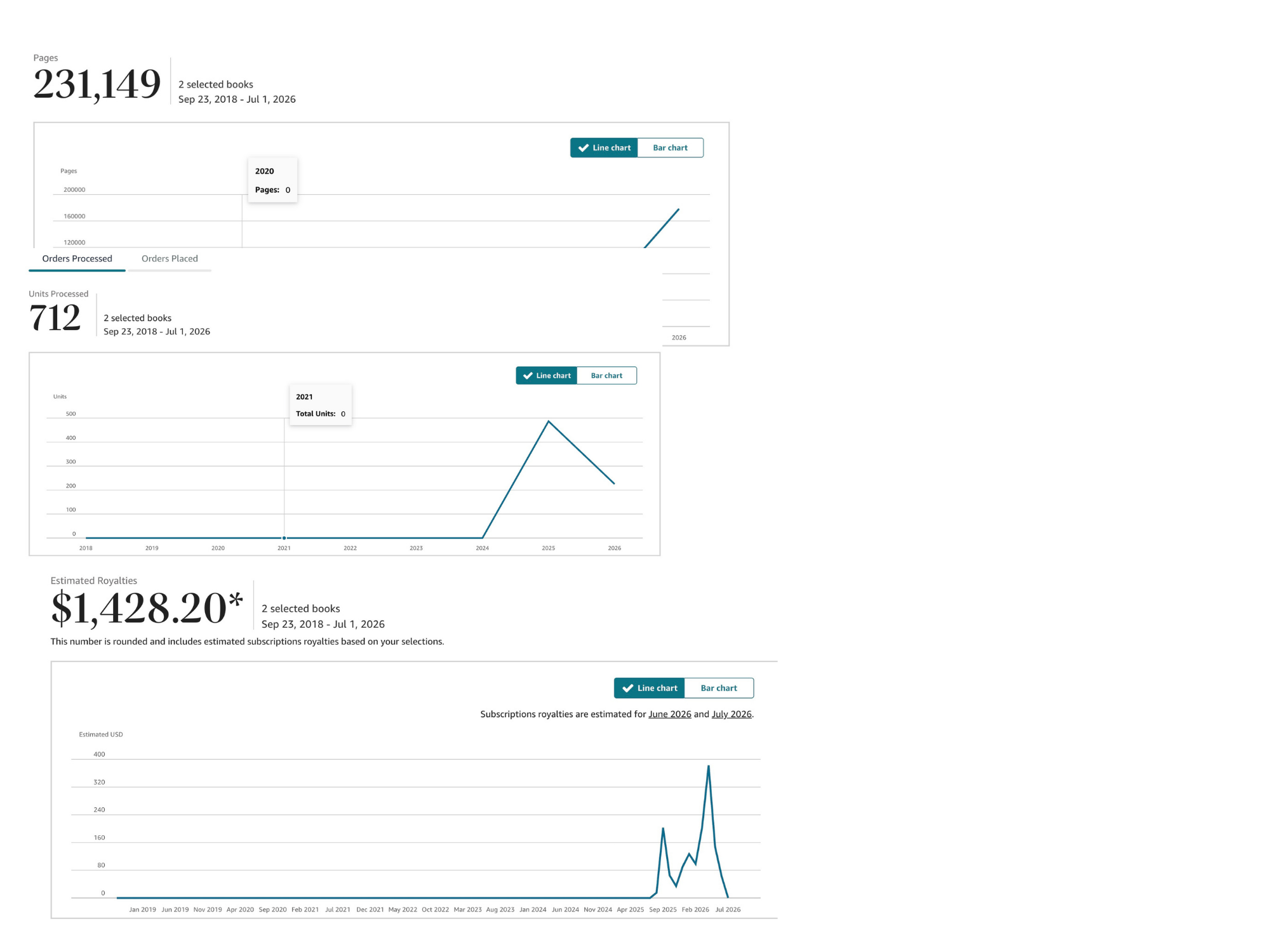
Over two years, I made just over R2,000 back.
Another book did much better.
It brought in about R15,000 in royalties over ten months.
Sounds great…
Until you realise I spent around R25,000 getting it out there.
And that’s before developmental editing and line editing, which can easily add another R30,000.
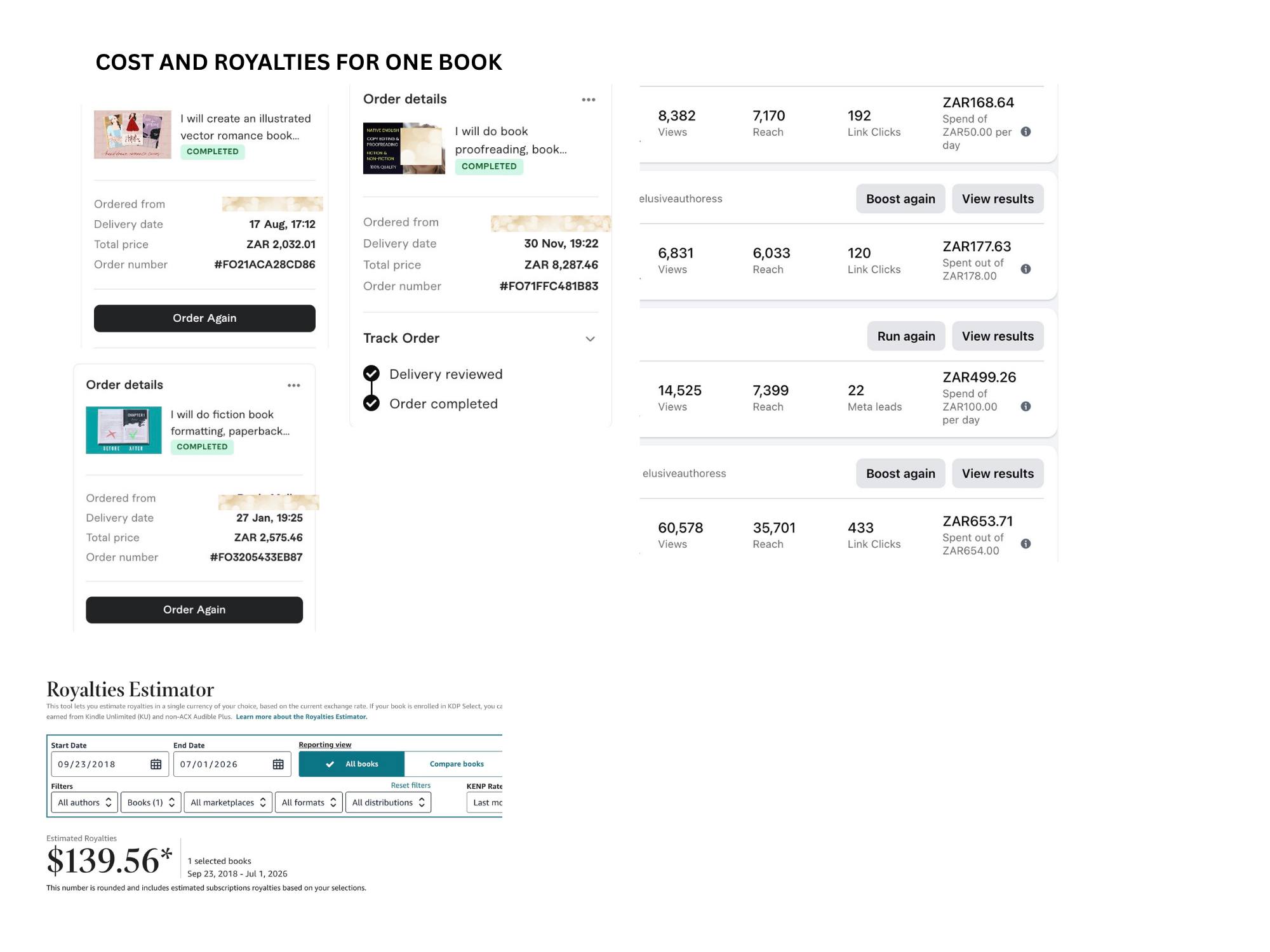
And then, we have a longer list for paperback ARC books. yes, we pay for those too.
So no… I’m definitely not getting rich from publishing books.
And I honestly don’t think AI-written books are suddenly going to make me rich either. 😂
Will I ever make all that money back? Probably not.
Would I spend it again? Without even thinking twice.
Why? Because somewhere along the way I realised I actually love writing.
Not because it pays well. Because I genuinely enjoy it.
Do I sometimes feel like giving up after reading some of these 1 star reviews or accusations?
Absolutely.
Then another reader tells me they couldn’t put my book down… Or they stayed up until 2 a.m. reading… Or that the ending made them cry…
…and suddenly I remember why I started writing in the first place.
But what about the author who can’t afford to lose R20,000… or R50,000?
What about the author who’s already emptied their savings just to publish one book?
There are no guarantees. You can do everything “right”… Hire editors. Pay for a beautiful cover. Run ads. And still never make your money back.
In fact, the average author sells around 250 books.
So before assuming indie authors are taking shortcuts… Remember that many of them are risking money they’ll probably never see again…
Simply because they had a story they wanted to tell.
So before someone asks...
No. Ai doesn't write my books.
The only Ai I regularly use is:
Adobe Illustrator
Aggressive Imagination
Author Insanity
Author Insecurity
Anxiety included.
And apparently its Author Indie, not Indie Author. Because that's now Ai too.
Anyway…
PEACE BE UPON YOU!
9. So what does this mean for the Publishing industry moving Forward.
I have a theory. And because I enjoy writing, I've decided to write an entire Epilogue.
Meet...
Melanie Smith
I still won't touch Indie Author's book. Most of them are probably Ai generated anyway. I felt pretty good about my decision. At this point, I don't care if my influencer career was over..
“Hi,” the store assistant said as she walked over when I entered the bookstore. “You look familiar.”
“I’m Melanie Smith. I used to be a book influencer with a pretty big following.”
“Yeah… that’s right. I remember you now.”
“I here this store has the Human Verified Books.
The assistant looked up and smiled, "We have books with the Verified Creative Provenance certificates." She took a paperback from a nearby display and handed it to me. A shiny gold sticker covered the back.
ORGANIC FREE-RANGE HUMAN AUTHOR CERTIFIED
That got me even more excited. Below was a QR code.
“How does this prove it’s human-written?” I asked, a little sceptical.
“Scan the QR code and you'll see.”
So I did.
My phone opened a full Verified Creative Provenance Report. It showed the first draft, the complete revision history, editor comments, hours spent writing, deleted chapters, word count progression… you name it.
I looked up from my phone, genuinely impressed.
“Wow.”
The assistant smiled.
“Can I help you find something?”
“Yes, please. I only want books with these VCP Certificates (Verified Creative Provenance)”
“Certainly. Follow me.”
She took me across an entire wall of them. All of them had the same gold badge. It was wonderful. Exactly what we want after all the AI drama in the publishing industry.
I picked up the first paperback, and looked at the back for pricing, and and almost dropped it.
R999.
“For a paperback?”
The assistant nodded like it was normal.
“Verified books are now considered premium products. Authors don’t just pay for professional editors, cover designers and proofreaders anymore. In addition, they have to pay for the VCP.”
“Oh…” I put it back on the shelf in slow motion. “So… where’s the indie section?”
She smiled again. “You’re standing in it.”
I stared at her. “What? These are indie books?”
She nodded. “It was. in fact Indie authors were actually the first to adopt Creative Provenance.”
I swallowed hard. “Okay…” “So where are the traditionally published books?”
She pointed to another aisle that was smaller. So I took one off the shelf to check the price.
R1,999.
“What?!”
“Traditional published” she replied.
I turned the book over. “No VCP badge?”
“They don’t need one.”
“But… how do I know it wasn’t written by AI?”
“They don't need need to prove it.”
"Some readers are calling it…" She continued.
"Traditional Publishing Privilege."
I put the book back, feeling confused.
“Who knows,” said the assistant with a laugh. “ Who knows, Maybe publishers will start using it too. Can you imagine the price tag.”
"Are there anything actual budget. Between R200 and R400.”
“Of course.”
She took me over to a massive wall filled with thousands of books with bright covers.
“These are the more affordable books.”
“Are they AI?”
She shrugged. “Probably most of them.”
“Most?”
“'Some might still be human-written, but they probably couldn’t afford the certification process, so they ended up here.”
I looked back at those shiny gold-badged books.
“So… how do I know which ones are actually human among these?”
The assistant gave me the same polite smile. “You don't. If we could tell for sure, they’d be on that other shelf, wouldn’t they?”
That somehow made me even more frustrated. “You know what? I’ll just buy an e-book.”
She looked at me in disbelief. “Oh… you don’t know?”
“Know what?”
“All the big digital platforms started rolling out Creative Provenance verification today.”
I frowned. “And the prices?”
She winced.
“They’re ridiculous.”
Within that moment, my entire body went numb.
I could feel a panic attack coming on.
Hopefully Wattpad is still free…
Or maybe I’ll just get my books from the library.
______________
Thank you for reading.
And yes… I promise this epilogue is 100% mine. No AI input. AI simply can’t compete with my weird imagination. 😂
To my fellow readers…
Don’t let the witch hunts consume you. Keep reading. And if you genuinely hated a book, leave your one-star review, move on, and simply don’t buy that author’s books again.
To my fellow writers…
Keep writing.
Read those one-star reviews like a CEO reads a business report. Take what helps. Ignore what doesn’t.
Then get back to telling stories.
After all…
That’s why we’re here.
Peace be upon you all. ❤️
